
Skip to content

For homeowners

Cracks in your house. What should you do next?

A crack, a sloping floor or a door that suddenly sticks means something has changed. It does not mean the house should be underpinned. Start with an independent look at the property, not a quote for a repair we do not sell.

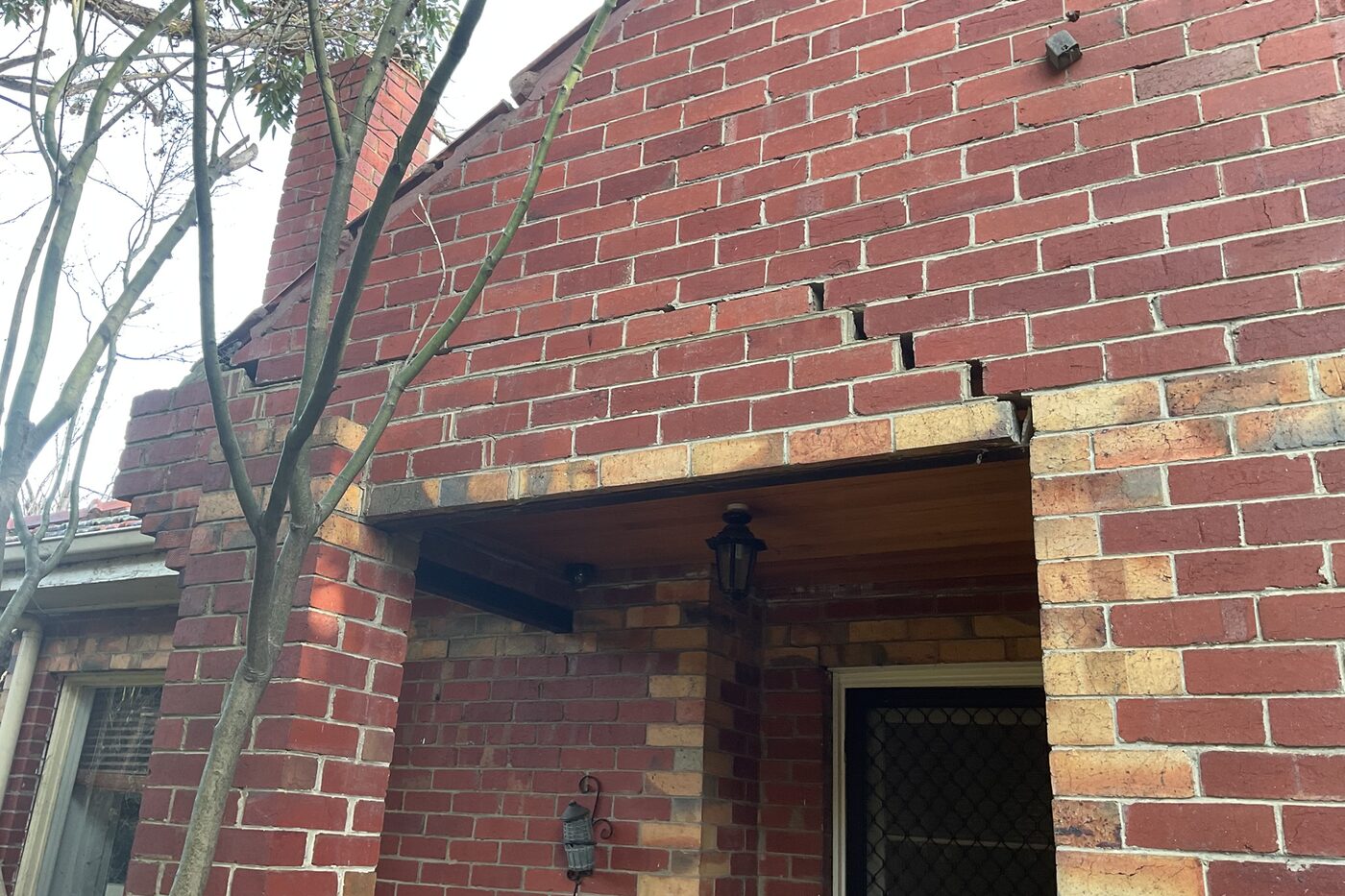
Stepped cracking and displaced bricks beside a doorway on a brick house.

The first step

Do not buy the repair to find out what the problem is.

Most homeowners reach us after a crack appears, a floor starts to feel wrong, or a contractor has already recommended underpinning or resin injection. Those are signs. They are not a diagnosis. We inspect the house, record the relative levels, and say whether the next step is monitoring or a specialist. If the open question is whether the house is still moving, or which way, SlabSense devices stay on site and record it every day.

Ground Movement Australia is an independent property movement consultancy servicing Adelaide, Melbourne, Sydney and Perth. We do not sell underpinning, resin injection or foundation repairs.

Adelaide

Reactive clay, older bungalows, and one-sided quotes.

Adelaide houses crack because the clay shrinks in a long dry summer and swells after rain. A 1920s bungalow and a later extension will not move as one building. Pinning only the low side can stop that side moving with the season while the rest of the house keeps going.

House cracks in Adelaide

Melbourne

Basaltic clay, older houses, and slab estates.

Western and northern Melbourne sit on clays that shrink and swell. Older brick and weatherboard houses show it in the walls. Newer waffle pods and raft slabs show it as a sloping floor and a door that no longer latches. The question is the same: down, up, or the season.

House cracks in Melbourne

Sydney

Western clay, and a different ground near the coast.

Western Sydney houses move with reactive clay and the weather. Closer to the coast and on the north shore, the cause is more often fill, sandstone, a tree, or an older house and a later addition. The same underpinning quote does not fit both.

House cracks in Sydney

Perth

Sand on the plain. Clay in known belts.

Perth is sandy, and a lot of movement there is a wet or poorly compacted pad. Heavy clay sits in specific ground: the eastern fringes of the northern suburbs, the Swan and Canning valleys, the Pinjarra Plain near the Darling Scarp, and the foothills. The same underpinning quote does not fit both.

House cracks in Perth

What you get

A plain next step, not a product.

  • The pattern of cracks, floors and openings, read with how the house was built.
  • Relative levels, and what a single set of levels can and cannot prove.
  • Whether monitoring is the missing evidence, and for how long.
  • Who should take the next step if a plumber, arborist or engineer is the right person.

What we will not do

We do not design underpinning, certify the house, or tell you an insurer must pay. If the evidence supports major work, the useful outcome is a clear reason and the right engineer. The decision stays with you.

Property movement guide

Questions people ask

What should I do if I find cracks in my house?

Do not start with a repair quote. Note what has changed, including sloping floors, doors that stick, and cracks that come back after patching. Then get an independent look at the whole house: the pattern of the cracks, the relative levels, how it was built, and whether anyone has shown the direction of movement. Ground Movement Australia does that assessment in Adelaide, Melbourne, Sydney and Perth. We do not sell underpinning or resin injection.

Do cracks in my walls mean the house is subsiding?

Not by themselves. Cracks, sticking doors and uneven floors mean something has changed. Subsidence is the ground going down. Heave is the ground coming up. From inside the house they look the same, and the wrong label is how people pay for the wrong repair.

I have been told I need underpinning. Should I go ahead?

Not until someone independent of the repair has shown whether the house is going down, coming up, or moving with the seasons. A low side on one visit is not proof that side has fallen. If the middle rose, lifting the low side makes the distortion worse.

Who should a homeowner call first in Adelaide or Melbourne?

Call someone who does not sell the repair. An assessment sorts what is visible and whether the next person is a plumber, an arborist, an engineer, or a period of monitoring. You need an engineer when someone has to decide stability or design a repair. You do not need one as the first call for every crack.

How do I know if my house is still moving?

A crack width on one day cannot tell you. A monitor left across the crack, or on the floor, records the change every day. If the trace is flat through a change in the weather, the damage may be old. If it keeps going one way, that is the record to take to an engineer.

CallEnquire