
Cracks appearing or returning
Can indicate. The building may be distorting, a finish may be failing, or an earlier repair may be opening again.
Does not automatically mean. A crack, on its own, does not mean the house needs underpinning.
Advice
Most people do not start by searching for ground movement. They start because something in the house has changed. These notes explain what those signs can mean, and why a large remediation quote deserves evidence first.
Signs
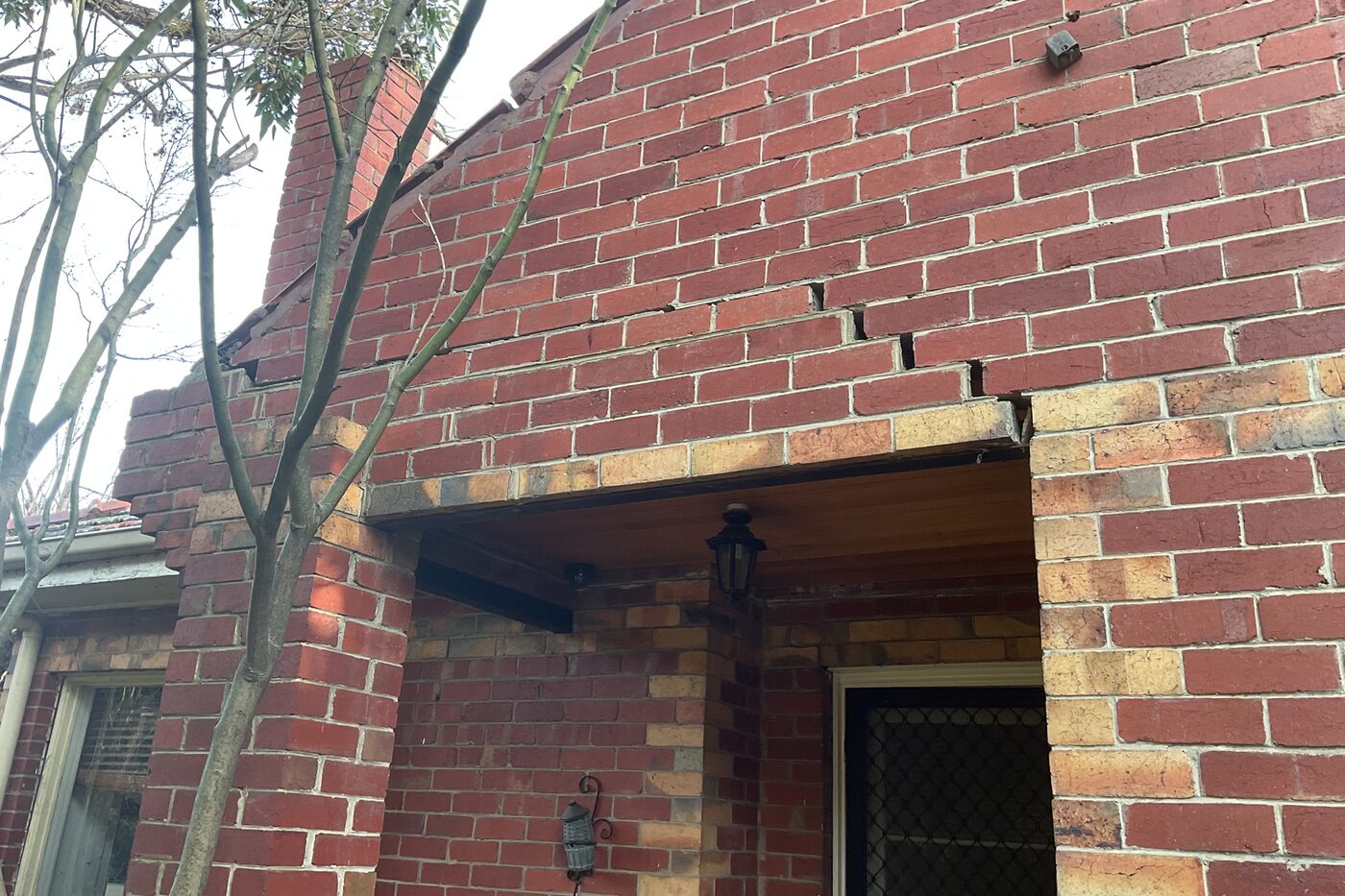
Visible damage is a reason to investigate. It is not, by itself, a reason to assume the remedy.
Can indicate. The building may be distorting, a finish may be failing, or an earlier repair may be opening again.
Does not automatically mean. A crack, on its own, does not mean the house needs underpinning.
Can indicate. Different parts of the building may be moving differently. The pattern of levels matters more than one dip.
Does not automatically mean. A floor that has always felt out of level is not the same evidence as a floor that has changed.
Can indicate. Openings that suddenly bind, rub or stop latching can be a sign of distortion in the surrounding frame.
Does not automatically mean. A door that swells in humid weather is not, by itself, a foundation diagnosis.
Can indicate. Openings at frames, cornices, skirtings or between an addition and the original building can be part of a wider pattern.
Does not automatically mean. A single gap should be read with the rest of the property, not treated as proof of a particular cause.
Can indicate. Paths, verandahs, driveways and slabs that drop, lift or pull away can show what the surrounding ground is doing.
Does not automatically mean. External concrete can move without the house footing having the same problem.
Can indicate. Recurring repairs, increasing distortion, or symptoms that return with the seasons often tell you more than one visit.
Does not automatically mean. Change confirms that time matters. It does not, by itself, name the remedy.
Heave and subsidence
Subsidence means the ground is going down and the house is following. Heave means the ground is coming up and taking the house with it. The symptoms inside are shared. The repairs are not. A quote for underpinning usually assumes the house has dropped and needs support put back. On a house that is heaving, that scope can spend tens of thousands on the wrong mechanism. Taking footings below the soil that swells and shrinks is a different question, and it belongs with an engineer.
A crack does not carry a label. A door sticks whether the opening has dropped or the frame has been pushed. A floor feels out of level either way. Anyone judging from the symptom alone is guessing the direction.
Much of the housing in Adelaide, Melbourne, western Sydney and many inland towns sits on reactive clay. It shrinks as it dries and swells as it wets, usually over weeks or months rather than after one shower. An inspection in a long dry spell can look like ongoing subsidence. The same house after prolonged rain can look like heave. Calling a seasonal cycle a one-way failure is how a temporary shape becomes a permanent quote.
Levels show which part is higher today. They do not, on their own, show which part moved. Edges lower than the middle can be edges that have shrunk, or a middle that has swollen — a leak under a slab is a typical cause of the second. The reverse happens too: wet ground against the house lifts the edges, and the middle then looks as though it has sunk. Pricing the repair off the low point, without knowing which way it travelled, is how heave is underpinned as subsidence.
Trees dry the clay around a house, and that drying can contribute to subsidence. After a large tree is removed, the same clay can wet up and heave. The chance of that lift is greater when the tree is older than the house. New cracks at that moment are sometimes the rise, not the last of the drop. Filled cracks can also crush as the house comes back up. Removal itself does not tell you which has happened.
None of this means underpinning is never warranted. It means the direction has to be established first: the pattern of the cracks, the shape of the levels, what changed on the site, and — if one visit cannot show it — a daily record through a change in the weather.
GMA does not issue a geotechnical conclusion or an underpinning design. Where the evidence points to heave, subsidence, or both, that finding belongs with the appropriately qualified engineer. Our role is to stop the decision being made from one symptom and one quote.
Before you underpin
Some homes genuinely need underpinning or other significant remediation. Others need a different problem addressed first. In some cases there is not yet enough evidence to justify major works at all. Those are three different decisions, and they should not be collapsed into one quote.
If the evidence supports major work, the useful outcome is a clear reason and the right qualified professionals — not a harder sell.
Drainage, plumbing leaks, vegetation, moisture and site conditions can all deserve investigation before a foundation solution is chosen.
If the unanswered question is whether the property is still moving, daily data is often cheaper and more useful than committing early.
Causes
Soil moisture, drainage that has changed, leaking pipes, nearby vegetation, the way the building was constructed, and the ground the house sits on can all be involved. Sometimes more than one. You do not have to arrive knowing whether the word is subsidence or heave. You should not accept a repair until that difference has been taken seriously. Calling one by the other’s name is how a house is underpinned for a movement it does not have.
The proportionate response is the one that matches the question. A seasonal crack and a wall that is progressively distorting should not be treated as the same job. An inspection does not replace a plumber, an arborist or an engineer when their conclusion is the one the decision needs.